
A BRIEF HISTORY OF TAORMINA
The island of many cultures
Sicily is the largest island in the Mediterranean, and has been a crossroads for the sea routes traversed by daring explorers and conquerors since time immemorial began. It has always been a melting pot of cultures, and remains so to this day.
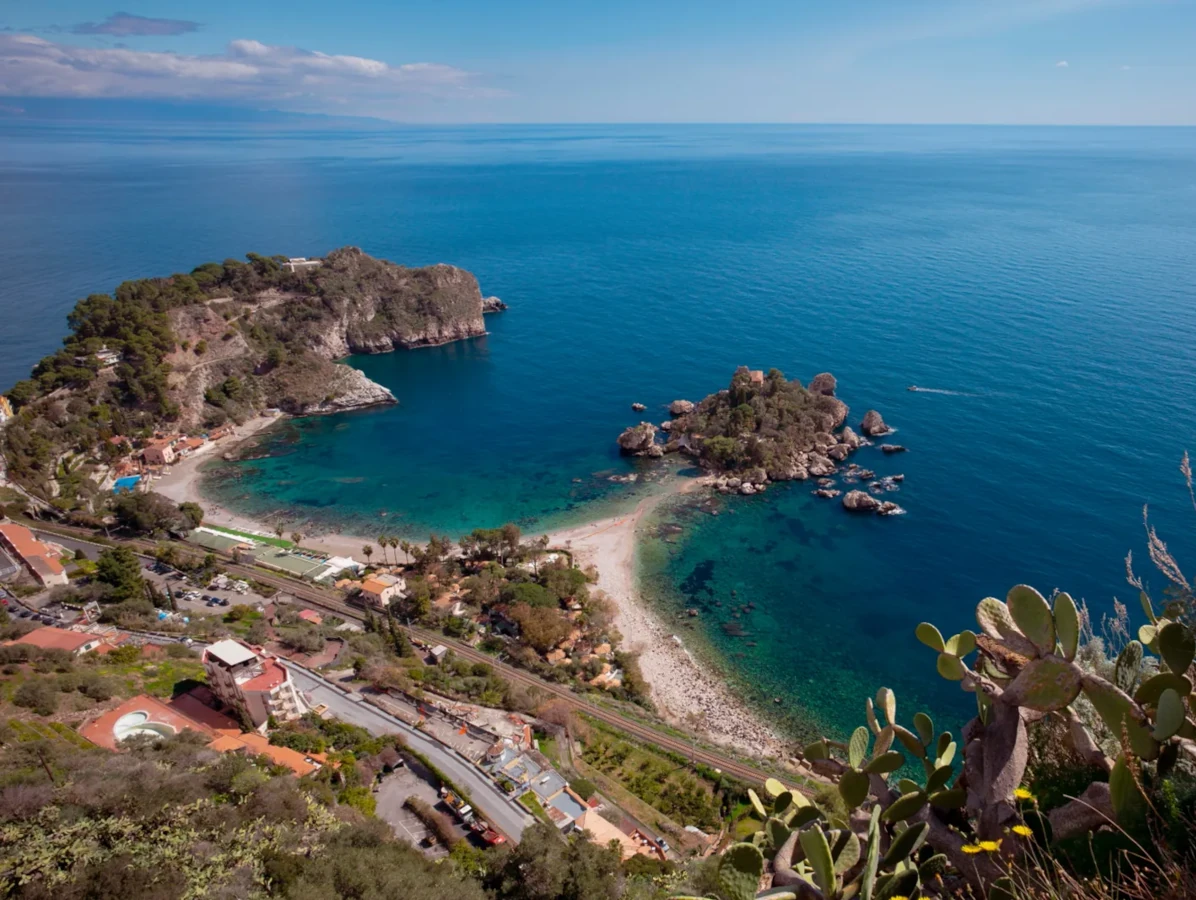
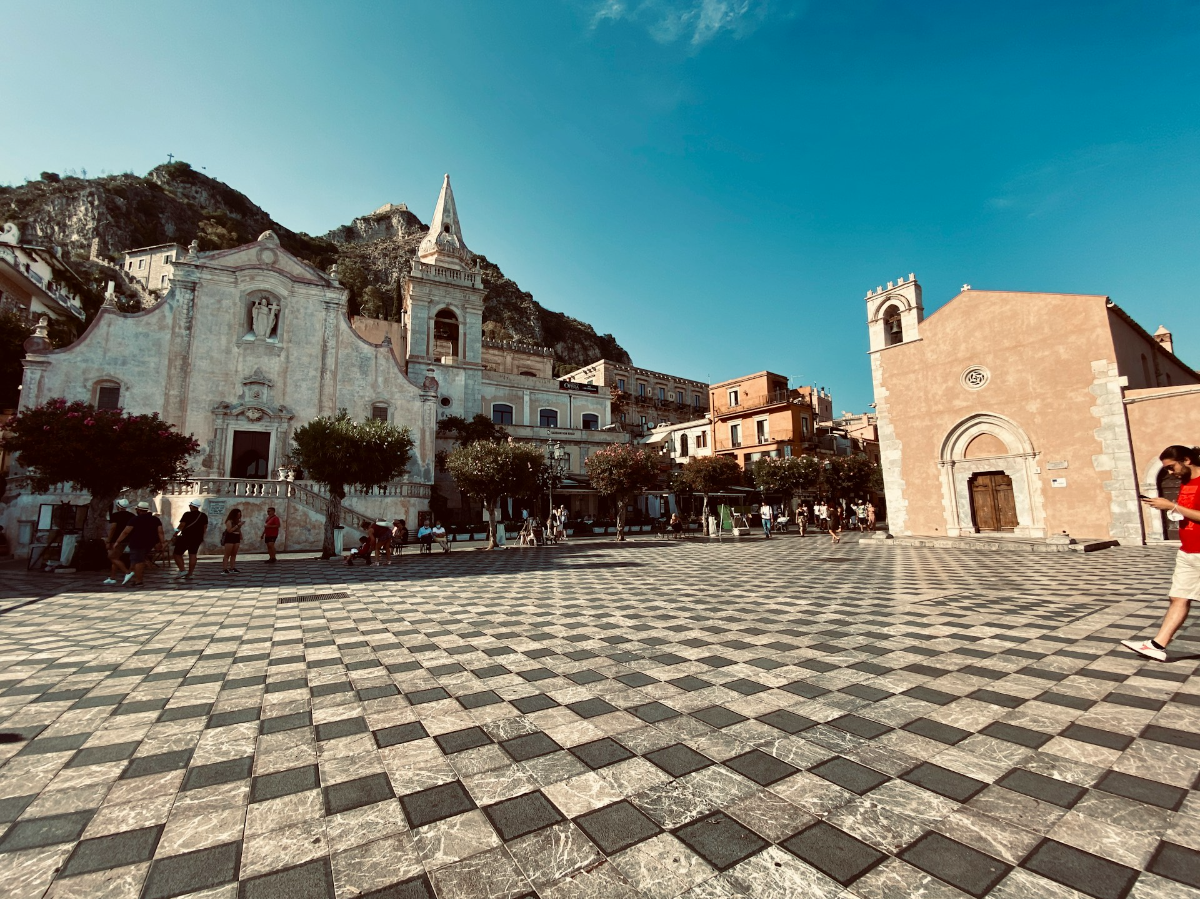
With its sheltered position perched above the bay of Giardini Naxos, Taormina has always played a central role in the island’s history.
Over thousands of years, Sicanians, Elymians, Sicels, Cretans, Mycenaeans, Cypriots, Phoenicians, Carthaginians, Greeks, Romans, Vandals, Goths, Byzantines, Arabs, Normans, Swabians, Angevins, Aragonese, Spaniards, Savoyards, Austrians and Bourbons each left cultural treasures and their artistic, linguistic and gastronomic legacies throughout Sicily. Today this island at the heart of the Mediterranean attracts travellers from all over the world.
The charm of Sicily and Taormina stems largely from the island’s multicultural history, and continues to thrive, driven by international tourism.
To understand this legacy and its appeal, let’s delve into the town’s rich and varied past, summarised here by Eddy Tronchet-Bonaventura, a scholar from Taormina specialising in Sicilian architecture and history.

A brief history of Taormina
PREHISTORIC AGE
Prehistory in Sicily is of immense interest, due to a succession of cultures and ethnic groups present on the island since the Old Stone Age (1). Evidence found in a number of caves suggests that the Taormina area was inhabited from the Upper Palaeolithic through to the Age of Metals. Pottery, flint artefacts and animal remains found in the area confirm human presence here during the Upper Palaeolithic and New Stone Age periods.
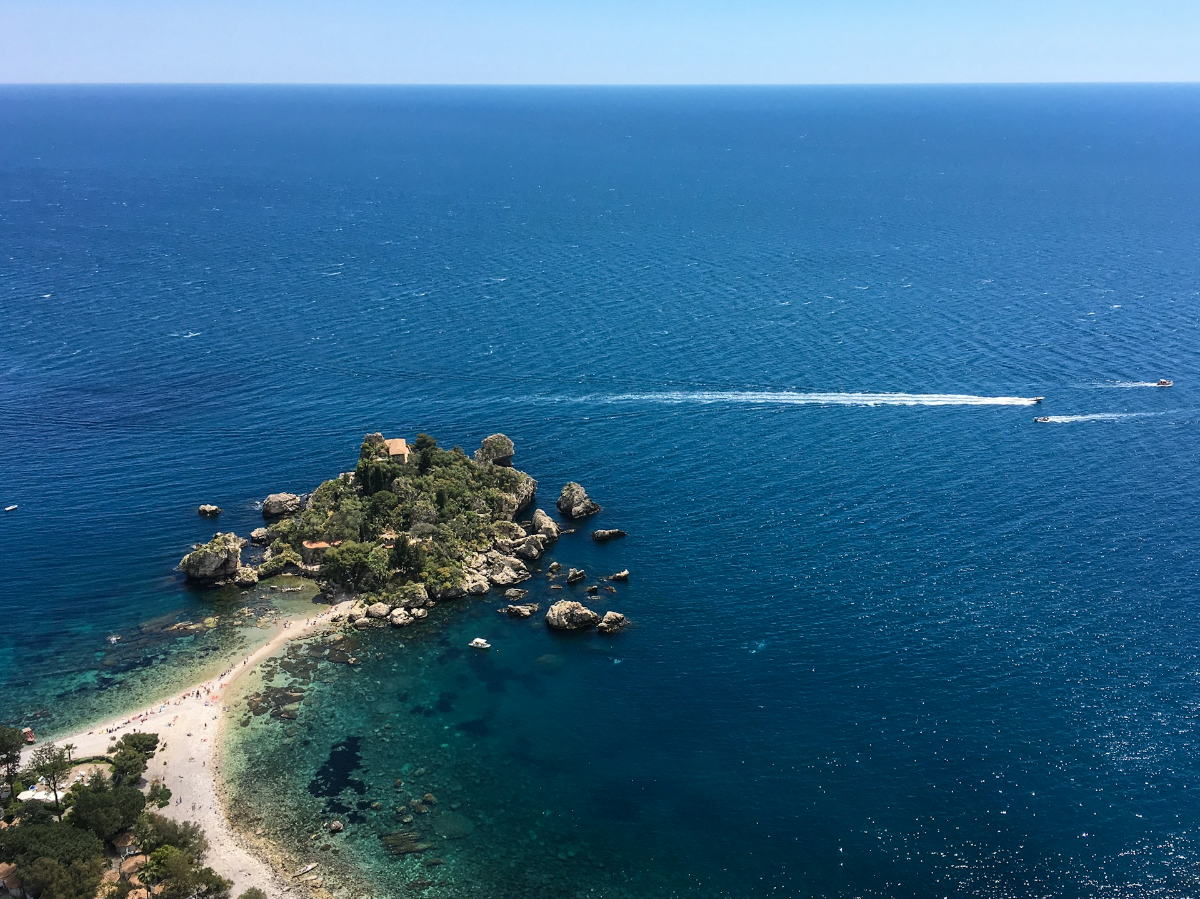
The Grotta dei Monaci cave (2) dates back to the Copper Age and contains a wealth of pottery from the Piano Conte, Serraferlicchio, Malpasso-Piano Quartara and S. Ippolito (3) facies. Terracotta artefacts dating from the Bronze Age, discovered underwater in the Bay of San Nicola (4), as well as several stone weight anchors (5) from Isola Bella, point to busy maritime trade along the sea routes from Crete, the Aegean and Cyprus. A bronze spearhead, several bronze axes and stone tools indicate that the whole of the Taormina area was inhabited during the Age of Metals.
The 50 rock-cut tombs of the Cocolonazzo di Mola necropolis also bear witness to human settlements here in protohistoric times, when the Greeks began to found the large Siceliot city-states.
HELLENIC AGE
Numerous terracotta artefacts provide evidence that Taormina was inhabited centuries before the Greek polis was officially founded.
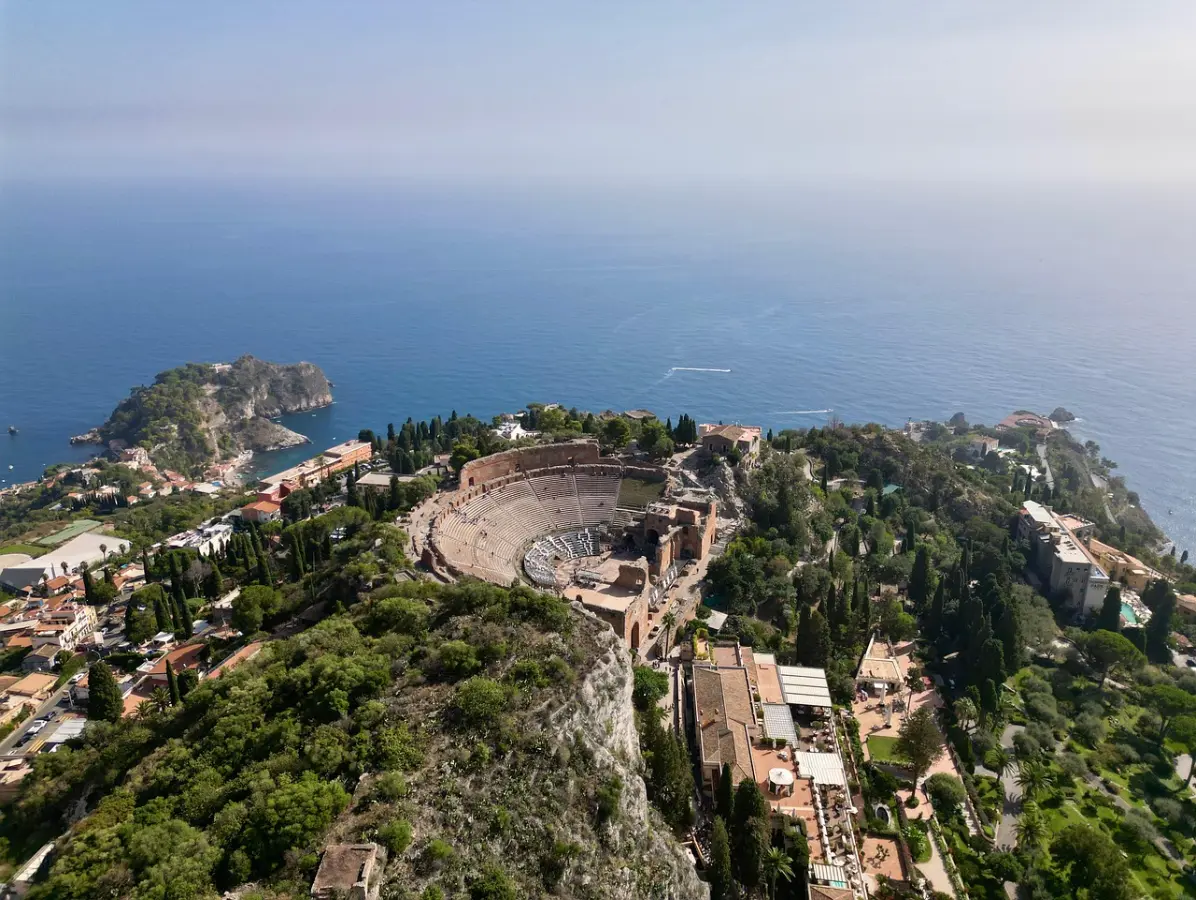
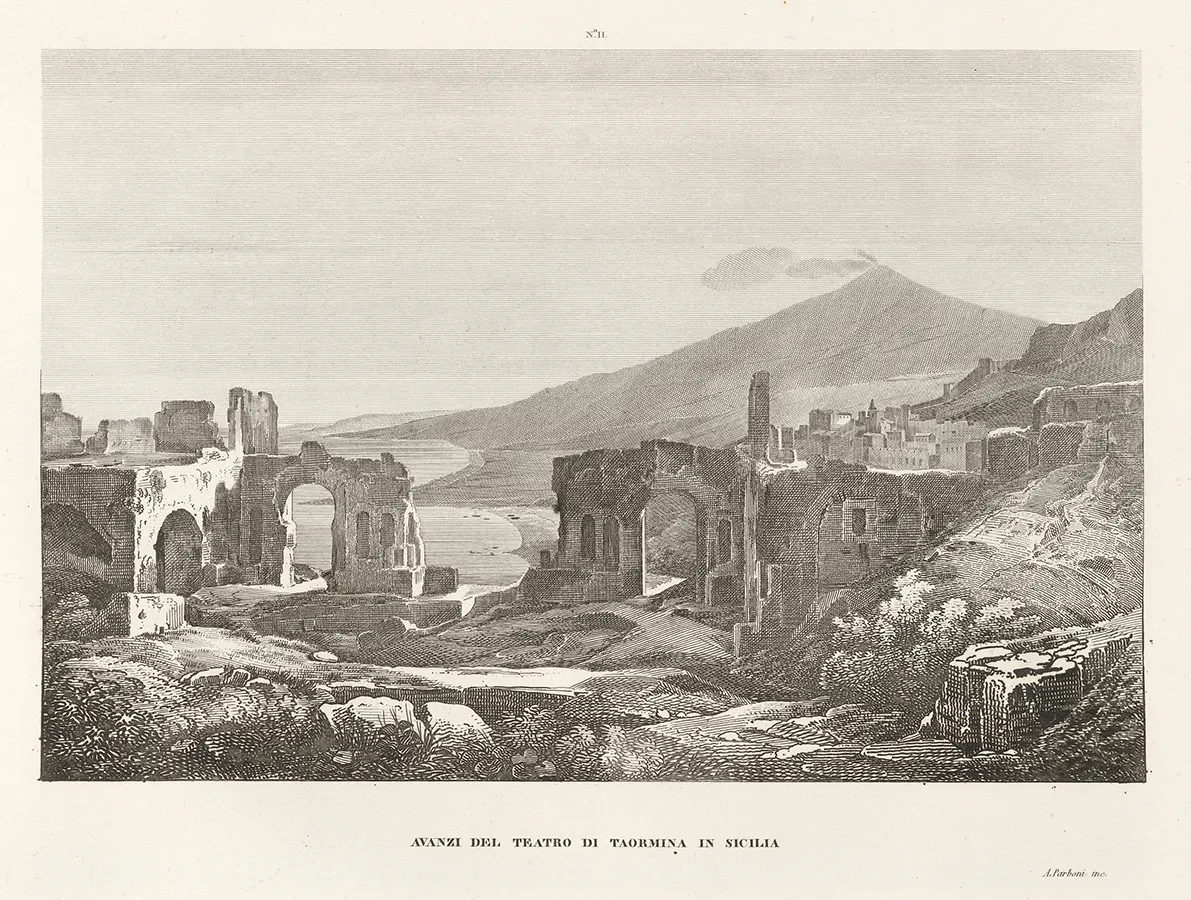
Historical sources appear insufficient to establish exactly when the Greek town of Tauromenion was founded, but it seems to have been after the destruction of Naxos by the tyrant Dionysius the Elder in 403 BC. It is reasonable to imagine a political agreement between the Sicels already living on Mount Tauro and the newly arrived Greeks towards the close of the 5th century BC (6). Taormina was embellished with magnificent Greek monuments, including the Theatre, with its unrivalled views; it is the second-largest in Sicily and one of the most beautiful in the Greek world. Visitors are frequently mesmerised by how Mount Etna's active eruptions frame the modern performances staged in the Theatre.
The remains of ancient temples, Greek stoas and residential neighbourhoods suggest the existence of an elaborate political and administrative organisation, evidence of which can be found in the numerous stone inscriptions in ancient Greek brought to light over the centuries. Annual magistrates and gymnasiarchs are listed in these accounting documents and financial reports.
Taormina’s Greek history is associated above all with Andromachus, who took in the exiles from Naxos, with the spirit of freedom and hospitality that the people of Taormina demonstrated once again when Andromachus invited the Corinthian commander Timoleon to the town during the war against the Carthaginians, and subsequently for the liberation of Siracusa and Sicily from tyranny.
Andromachus was the father of the famous historian Timaeus of Taormina, who inspired many scholars who came after him. A free-spirited and democratic figure, he sought to contain Syracusan tyrant Agathocles’ lust for power.
ROMAN AGE
At the beginning of the 3rd century BC, the people of Taormina aided Pyrrhus, King of Epirus, in his memorable campaign in Sicily, beginning with the conquest of Siracusa. In the 3rd century BC, Taormina was involved in the First Punic War between the Romans and the Carthaginians (264 BC–241 BC), and the naval victory of the Roman consul Gaius Lutatius Catulus marked the end of hostilities with Carthage and the establishment of the first Roman province in Sicily. Taormina enjoyed unrivalled prosperity in the political orbit of the basileus Hiero II. Marble from the quarries of Taormina (7) was used for the huge ship Syrakosia, designed by Archimedes, the illustrious mathematician from Siracusa. At the end of the Second Punic War, Taormina was one of the few cities in Sicily to be regarded as an ‘ally’ of Rome, thereby avoiding heavy taxes and levies (8).
In Roman times, sumptuous villas, richly decorated with frescoes and mosaics, enhanced the beauty of Taormina, and many marble and bronze statues embellished the town’s aristocratic mansions. Architects and engineers built aqueducts, thermal baths and cisterns, some of which are still in use today. During the Hellenistic Age, wines from Tauromenion (modern-day Taormina), made from vines planted on the slopes of Etna, were enjoyed by families and their guests during banquets (9). From archaeological discoveries made over the last 75 years (10) in the waters off Taormina, we know that fine wines from Greece also reached Taormina in amphorae from the island of Rhodes.
In 46 BC, Julius Caesar granted Latin rights to Taormina, a legal status almost equivalent to Roman citizenship. During the civil war between Octavian and Sextus Pompey, Taormina was the scene of a failed attempt by Octavian Augustus to capture the town (11).
Taormina prospered during the Roman Imperial period, as evidenced by the restoration of the Ancient Theatre, the construction of the new Odeon, and the grand thermal baths in Piazza Badia.
BYZANTINE PERIOD
From 440 AD to 535 AD, the Vandals under Genseric were succeeded by the Heruli under Odoacer (12) and then by the Ostrogoths under Theodoric. The Byzantines (Eastern Roman Empire) landed on the island in 535 AD with the aim of defeating the Ostrogoths and reconquering Sicily. The emperor Justinian’s celebrated general Flavius Bellisarius captured Catania, Siracusa and Palermo (13). He liberated Sicily from the Ostrogoths, and the island remained Greek-Roman for almost three centuries. Consequently, Taormina too came under Byzantine rule from 535 to 902 AD.
The magnificent jewellery discovered in Taormina is indicative of the indisputable prosperity of the town during the Byzantine period (14). It is conceivable that the Greek temple of Isis was first converted into a Christian place of worship (the Church of San Pancrazio), as were other Greek temples, such as those in Siracusa and Agrigento, which were similarly converted during the Justinian era (6th century AD).
In the 8th and 9th centuries, Taormina – where Greek was spoken and the Greek religious rite was observed – was always among the most important Sicilian cities represented at the ecumenical councils. A Byzantine sword (15), with a striking scabbard decorated with 24 bronze pavilions, would appear to confirm a shipwreck during the period when Arab raids along the eastern coast of Sicily, as early as the 8th century, were already heralding the eventual capture of the town in 902 AD. The Aghlabid troops, led by Ibrahim II, laid siege to Taormina, massacring its inhabitants and reducing them to slavery.
ARAB PERIOD
The siege and fall of Taormina in 902 AD marked the end of the Byzantine period in Sicily and the beginning of Islamic rule. Despite fierce resistance against Islamisation (16), in 962 AD, the town once again fell into the hands of the Fatimids (the dynasty that succeeded the Aghlabids) under Caliph Al-Muizz, after whom it was given the name of Almoezia.
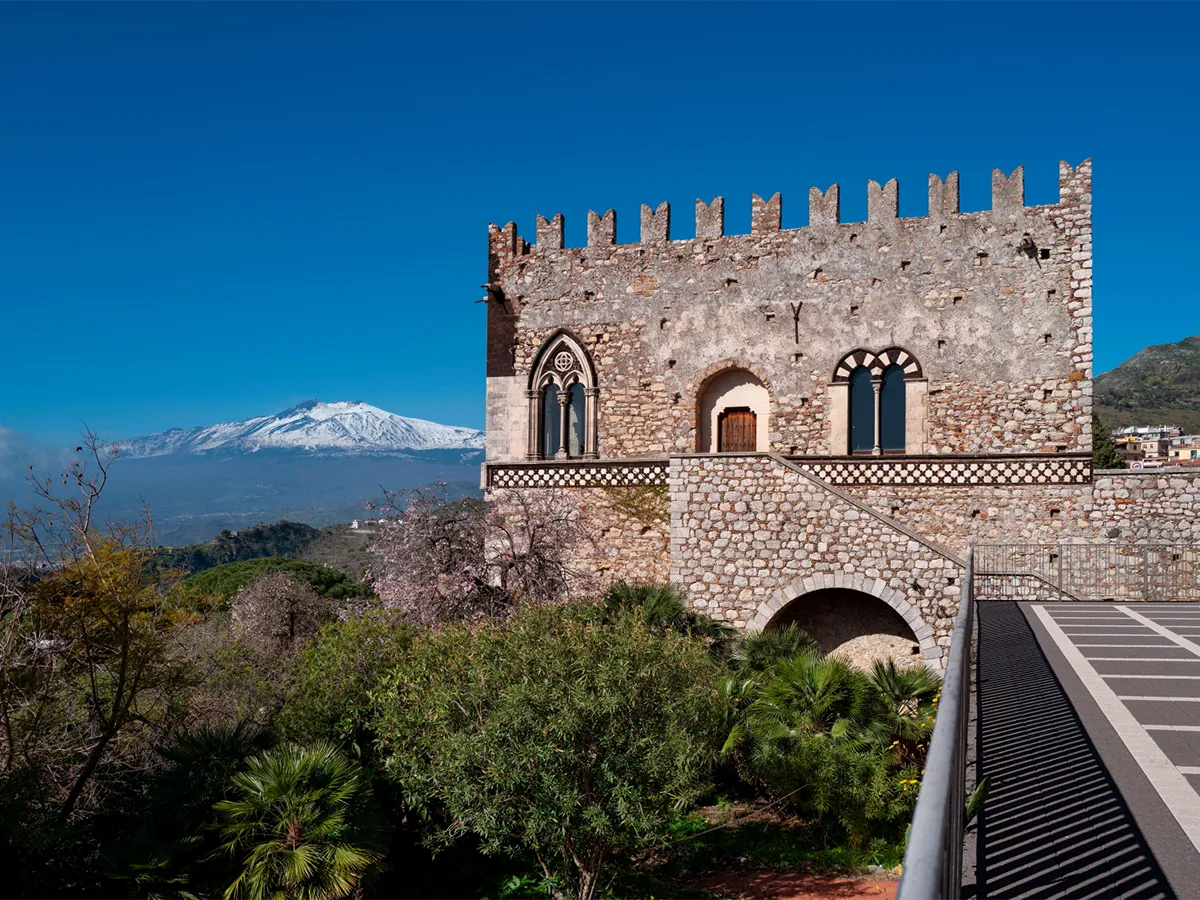
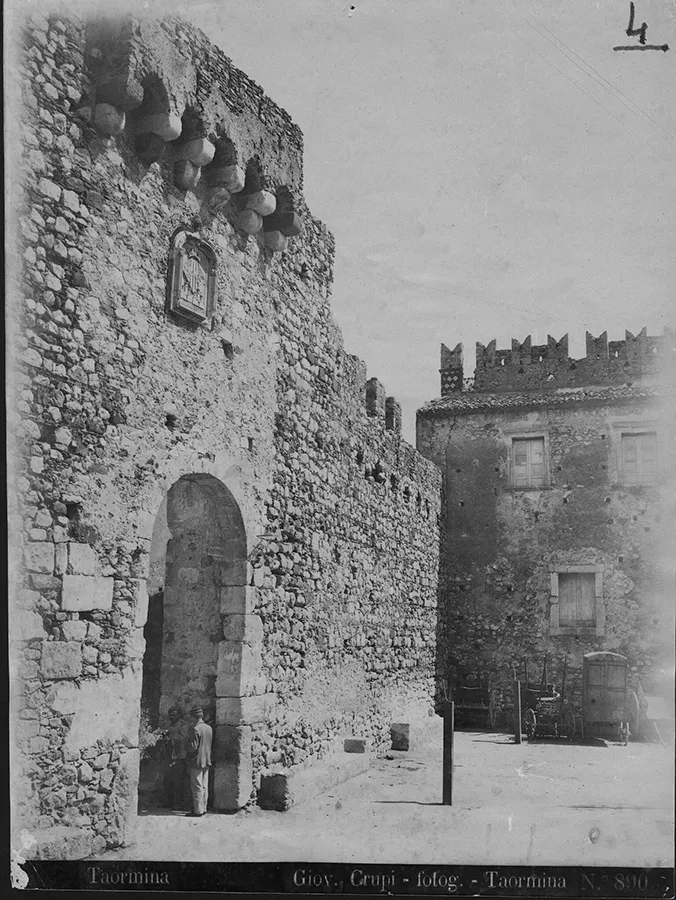
Traces of the Arab period in Taormina include the necropolis known as the ‘Saracen tombs’ (in use from late antiquity until the 14th century), and the Arab Tower with its Islamic battlements, which forms the core of Palazzo Corvaja. The Arabs introduced a wide variety of crops to Sicily, enriching the agriculture and thus the cuisine of the island. Cannoli, cassata, arancini and other dishes of Arab origin can today be enjoyed everywhere in Taormina.
For a short time between 1038 and 1040, an attempt by general George Maniakes to recapture the town for the Byzantines wrested Taormina from Muslim control. However, the Saracen emirs in Taormina showed no signs of submission (17) until the arrival of the Normans under Roger I, who conquered Taormina in August 1079, following a siege lasting many months and the erection of 22 wooden towers to block supplies both by sea and by land. The Arabs were unable to put up any resistance. Once again, Taormina marked a bridge between two civilisations vying for control of southern Italy.
NORMAN PERIOD
The most beautiful noble buildings in Taormina date back to the Norman period, and they feature a blend of Byzantine, Arabic and Norman styles. During the reign of King Tancred (1138–1194), Taormina became a favourite residence for the Norman princes, as well as a meeting place for monarchs travelling to the East (18). Following Tancred’s meeting in Messina with Richard the Lionheart and the king of France, during which he was gifted King Arthur’s sword Excalibur, the Norman king returned to Taormina.
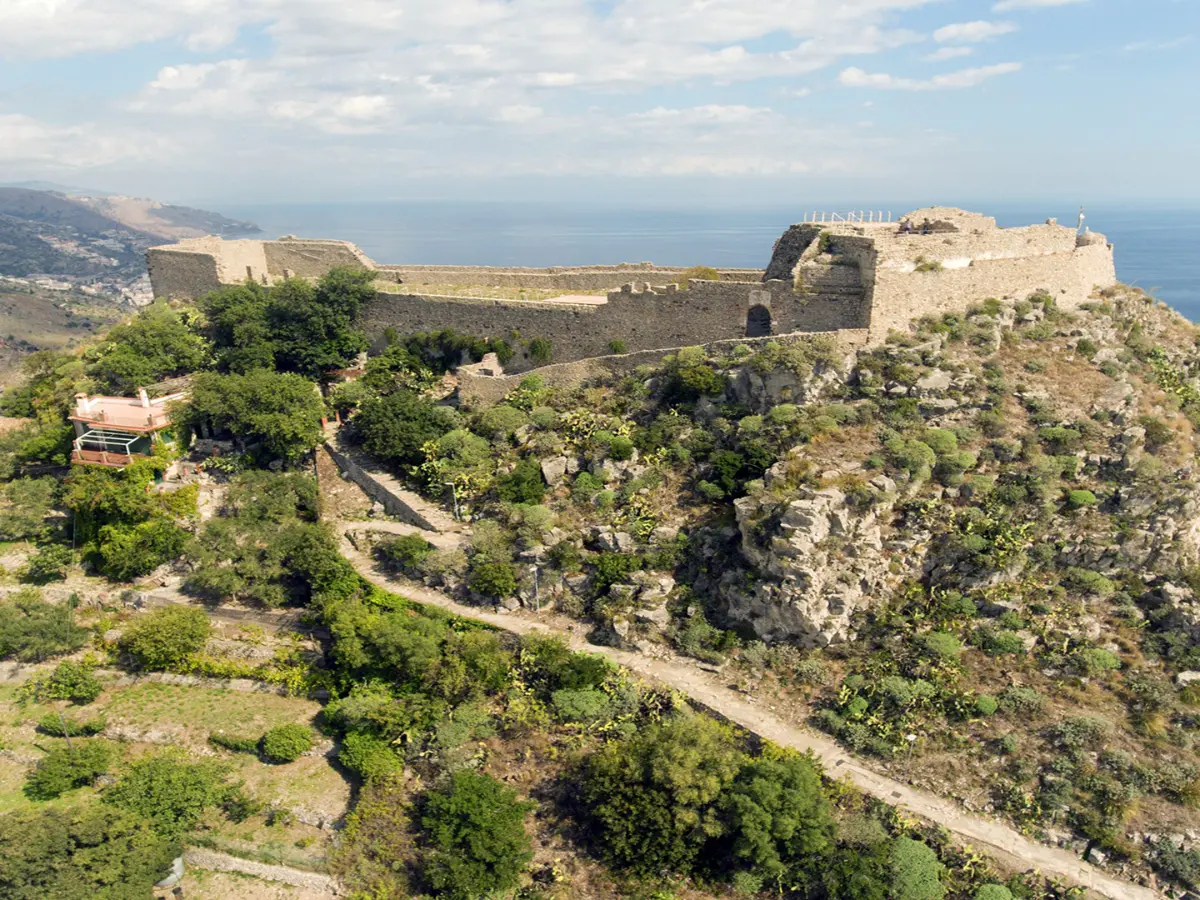
In 1186, Henry VI of the Hohenstaufen dynasty married Constance of Altavilla, daughter of King Roger II of Sicily, in Milan. He then seized control of the Kingdom of Sicily. He was succeeded by his son Frederick II, ‘Stupor Mundi’, who entrusted the town of Taormina to a noble castellan, along with Calatabiano Castle. In addition, Castel Tauro was one of the ‘castra exempta’, administered directly by the emperor. These castles were of particular importance, because they were subject to a special legal regime (19). Consequently, Taormina Castle, together with the castles of Aci and Scaletta, controlled the coastal route that ran from Messina to Catania, confirming its close links with the transport routes and ports (20). Castel Tauro overlooked both the Via Valeria, the main road in Taormina, and the harbour area in the bay of San Nicola/Spisone.
Taormina was thus drawn into the Sicilian Vespers uprising against the Angevins until the arrival of Peter III of Aragon, sparking a bitter power struggle between France and the Crown of Aragon. James II received five triremes from the people of Taormina to fight the Angevins. Sicily's strategic location, natural assets and rich agriculture made the island a highly appealing prospect. Peter III’s marriage to Constance, daughter of Manfred and the last heir of the Hohenstaufen dynasty, enabled him to lay claim to Sicily, ushering in the belligerent Aragonese period that lasted from 1282 to 1410.
ARAGONESE PERIOD
Taormina’s elevated position nonetheless allowed the town to maintain a certain level of prosperity, as evidenced by the work carried out on the noble buildings of Norman origin but featuring architectural details from a later period, namely the 14th century. At Palazzo Corvaja, Don Juan De Termes oversaw the construction of the wing adjacent to the Arab tower.
Palazzo Duchi di Santo Stefano and Palazzo Badia Vecchia were embellished with mullioned and triple-lancet windows in a style characteristic of Chiaramonte Gothic. The need to defend the town is clearly evident in the battlements of the outer walls of Taormina Cathedral, built in 1330. Several buildings along the Via Consolare Valeria and a number of monasteries, including San Domenico, were designed and built during this period. Palazzo Ciampoli dates back to 1412, and in 1410, Palazzo Corvaja hosted a meeting of the Sicilian Parliament in the presence of Queen Blanche of Navarre to elect the new king.
As early as the High Middle Ages, Taormina was home to a thriving Jewish community, with a synagogue, a mikveh and a cemetery, and today’s street names still bear witness to the medieval Ghetto quarter, situated between the Cathedral, the Convent of San Domenico and Porta Catania.
One of the consequences of the rise of the Ottoman Empire, closely bound up with the conflict between the French and Charles V, was a resurgence of piracy in the western Mediterranean. Barbary corsair raids began targeting the coasts of Sicily in the 16th century. In 1539, while visiting his father in Taormina, the deputy of the viceroy of Sicily witnessed the storming of his galley and the capture of its entire crew, who were sold into slavery in North Africa (21).
FROM THE 1700s TO THE PRESENT DAY
On 16 October 1675, Messina attacked Taormina with 24 ships, because it was loyal to the King of Spain. In 1713, Victor Amadeus, Duke of Savoy, travelled to Taormina with his wife, Anne of Orléans, but Philip V of Bourbon took back control of Sicily, and in 1719, the Spanish and the Austrian Empire clashed at the Battle of Francavilla. At the time of the battle, many warships sailed along the coast off Taormina, calling at its ports.
In the 19th century, Taormina was occupied by a division of the Sicilian National Army during the brief existence of the Kingdom of Sicily in 1848–1849, prior to the unification of Italy.
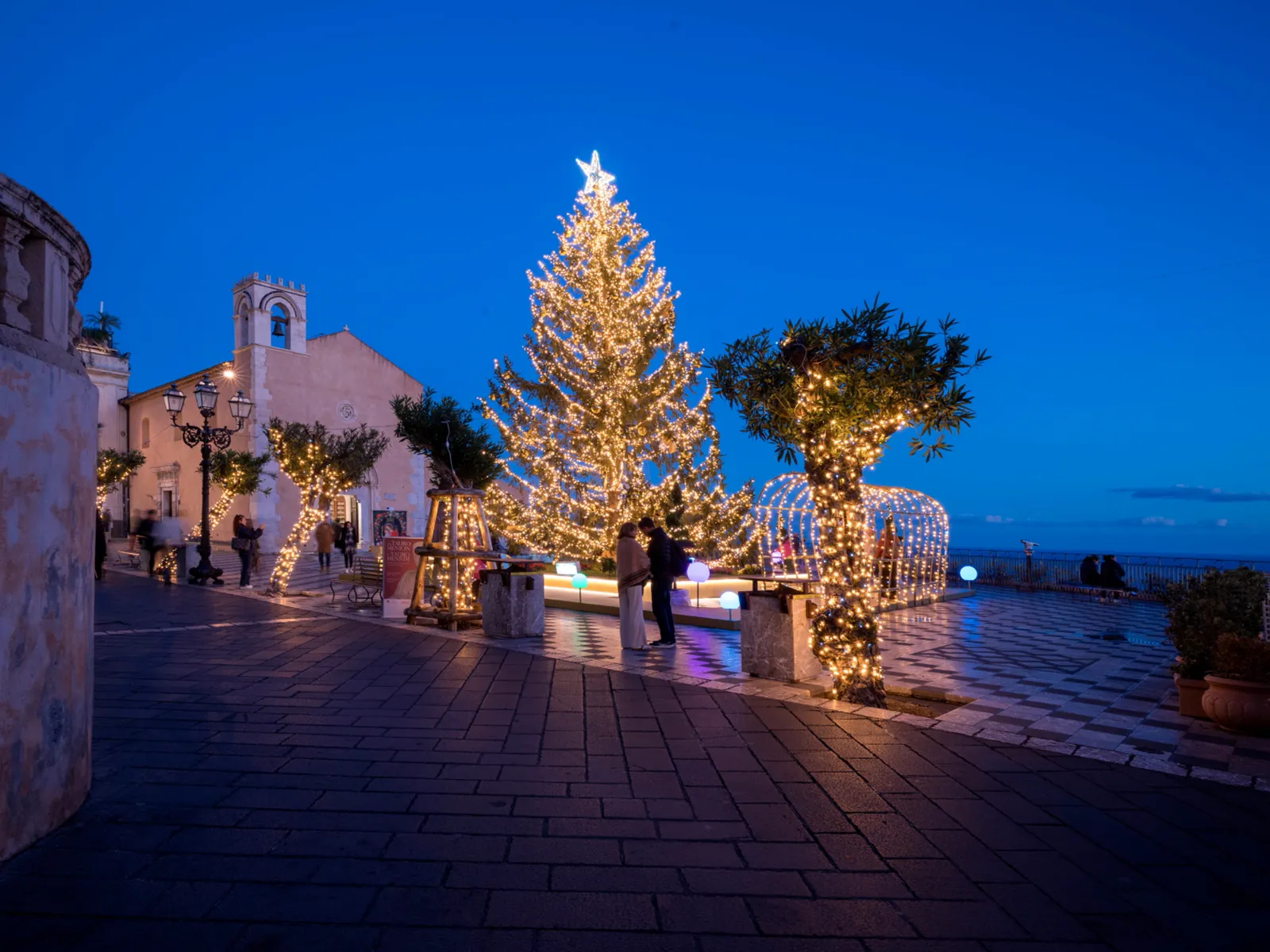
From the mid-18th century onwards, Taormina became one of the main destinations on the Grand Tour. Distinguished German, English and French figures sojourned there, bringing worldwide renown to the town. The bombing raids of the Second World War left deep scars on the urban and social fabric of the town, which healed in the immediate post-war period, when Taormina became the most popular destination in Sicily with European and American travellers. It was chosen as the venue for the G7 in 2017, partly thanks to the exceptional range of accommodation that makes Taormina one of the most sought-after destinations for international tourism.
Eddy Tronchet
NOTES
GALLERY
(1) Sebastiano Tusa, La Sicilia nella Preistoria
(2) Luigi Bernabò Brea, Meligunis Lipara IV, p.682
(3) Dario Barbera, Terrazzi, grotte, cocole e torrenti. Frequentazioni e strategie insediative pre-protostoriche a Taormina (ME)
(4) E.Tronchet Bonaventura, Scoperte nelle acque di Taormina. VI Rassegna arch. Sub. Giardini Naxos. pp. 149-157
(5) Idem, Riserva Naturale Orientata Isola Bella, Arch. Subacquea, pp.163-184 Pangea ed.
(6) Diodoro Siculo cita due fondazioni: una avvenuta nel 396 a.C. e la seconda nel 358 a.C.
(7) Ateneo, Deipnosofisti
(8) Cicerone, Verrine,II,4,50
(9) Plinio il Vecchio, Nat. Hist.,XIV 25 e 66
(10) Tronchet Bonaventura, op. cit.
(11) Appiano, Bellum civile, V 449-65
(12) che aveva deposto l’ultimo imperatore romano Romolo Augusto
(13) Procopio, De Bello Gothico, IV, 14
(14) Paolo Orsi, Sicilia Bizantina
(15) Tronchet Bonaventura, op. cit. datata al periodo 775 d.C. – 830 d.C. sulla base dell’esame al radiocarbonio eseguito a Centro di restauro di Firenze
(16) F.Mauceri, Federico II e la Sicilia, i castelli dell’imperatore
(17) J. Julius Norwich, I Normanni nel Sud
(18) Giuseppe Di Gregorio, Taormina – Le emergenze architettoniche dell’edilizia civile. P.78; Armando Dillon, Interpretazione di Taormina
(19) F. Mauceri, op.cit.
(20) F. Mauceri, op.cit.
(21) Denis Mack Smith, Storia della Sicilia medievale e moderna